
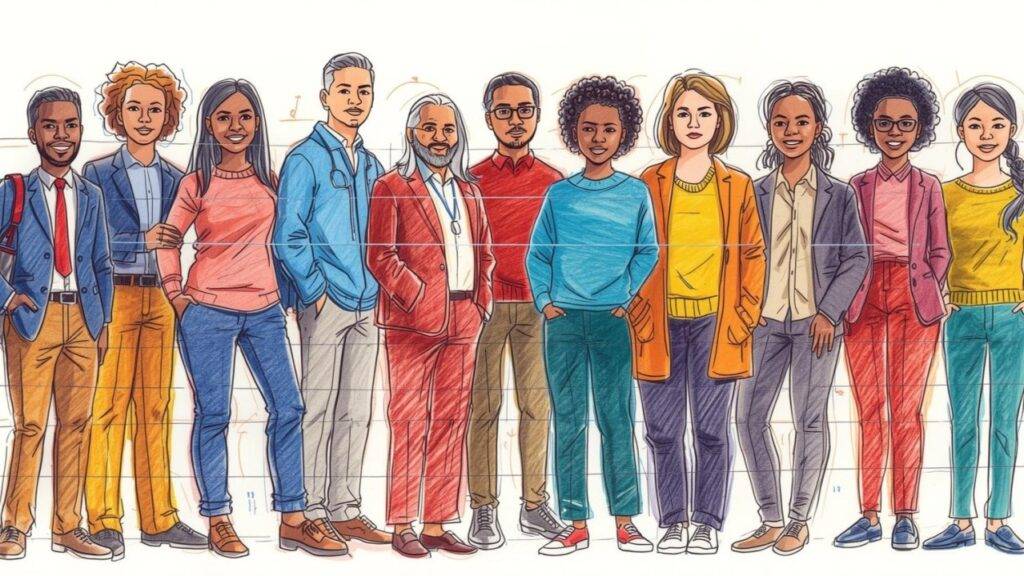
When I think of health equity, I don’t see it simply as “equality of outcomes.” Different people are different, different populations are different. Expecting exactly the same outcomes across populations is aspirational but not achievable. When I think of health equity, it’s about ensuring that everyone has a fair and just opportunity to attain their highest level of health. To understand this, we must first map out the problem space. What are the barriers that prevent populations from achieving optimal health?
The Five Core Challenges
Access to Primary Care: Can people get basic preventive care, chronic disease management, and treatment for common illnesses? In much of rural America, the answer is no. The nearest primary care physician might be an hour’s drive away, assuming you have a car.
Access to Specialty Care: When someone needs a cardiologist, an oncologist, or any specialized service, can they get it? Many rural hospitals have closed. Community hospitals that remain open often cannot sustain specialty practices. This isn’t just inconvenient. It’s deadly.
The Affordability of Care: Even if healthcare is physically accessible, can people afford it? High deductibles, surprise billing, and the cost of prescription drugs create financial barriers that transcend race, geography, and every other demographic category.
Culturally Competent Care: Healthcare must meet patients where they are, both physically and culturally. Language barriers, cultural misunderstandings about symptoms and treatment, implicit biases among providers, and a healthcare system that doesn’t understand the lived experience of marginalized communities all contribute to poor outcomes.
Health Literacy: Can people understand their diagnosis, read medication instructions, navigate insurance bureaucracy, and make informed decisions about their care? A lot of it is attributed to education level in academic literature, but as we all know, health literacy can often depend on which influencer the patient follows.
All of the above factors compound into measurable differences in mortality, morbidity, and quality of life. People living in the same county can have wildly different life expectancies based on their zip code, race, language spoken, education level, and income.
How We Divide Populations: Race Is Only One Variable
This is where most discussions of health equity go astray. The prevailing narrative focuses almost entirely on race, specifically the disparities between Black and White Americans. This is important, but it’s incomplete. When we treat race as the only axis of analysis, we miss critical insights and end up with solutions that don’t actually solve the underlying problems.
The problem with saying “Caucasian folks have way better outcomes than African Americans”: it’s only true on average. Averages obscure as much as they reveal. When we dig into the why, the picture becomes more nuanced.
The majority of what we call “racial health disparities” is actually driven by the same universal barriers that affect every other underserved group. A comprehensive study analyzing National Health and Nutrition Examination Survey (NHANES) data found that Black participants had a 46% higher mortality risk than White participants when adjusting only for age and sex. However, after adjusting for income and education, that increased risk dropped to just 15%. In other words, socioeconomic factors explained approximately 67% of the racial mortality gap. [1]
The study went further, finding that:
- Income alone mediated 62% of the association between race and mortality
- Health behaviors mediated 61% of the relationship
When both socioeconomic status and health behaviors were included in the model, the racial disparity became statistically insignificant
This doesn’t mean structural racism doesn’t exist or doesn’t matter. Health behaviors are population-specific and require culturally competent care. So, that remaining 15% gap before accounting for health behaviors, as well as the known persistent disparities in specific outcomes like maternal mortality even at high income levels, demonstrate that race-specific factors do play a role. However, when we conflate the effects of poverty, education, geography, and lack of access with the effects of racism, we misdiagnose the problem. And when you misdiagnose a problem, you prescribe the wrong solution.
The Universalist Reframe: Track and Tackle the Root Causes Separately
As I have written in the past, when I say universalism I do not mean theological universalism or a vague nod to moral philosophy. I’m talking about epistemological universalism: the belief that universal principles and theories exist, and that they can be used to explain the behavior of complex systems. [2] Read more here.
So, from a universalist perspective, the current approach to “health equity” is fundamentally flawed. It conflates multiple distinct problems into a single category. Then it proposes solutions that are either too narrow (focusing only on race) or too broad (generic “health equity initiatives” that don’t address any specific mechanism).
Universal Principle #1: Access and Affordability Are Universal Needs
Whether you’re white, Black, Latino, Asian, Native American, rich, poor, urban, or rural, if you can’t physically get to a doctor or afford the care once you get there, you will have worse health outcomes. Full stop. This is a universal principle.
Solutions that address access and affordability help everyone, especially the underserved. Expanding telemedicine, reopening rural hospitals, training more primary care physicians, capping drug prices, simplifying insurance, and creating transparent pricing all improve health equity universally. These are not “race-specific” interventions, but because of the clear racial differences in socioeconomic status, you will see the racial equity gap close.
For example, when we implement a program to expand primary care access in underserved areas and then market it as “addressing racial health disparities,” we’re engaging virtue signaling through misattribution. Yes, the program may help Black Americans because many Black Americans live in underserved areas. But it also should help rural white Americans, Latino immigrants, or poor Asian communities. The mechanism of action is access, not antiracism.
This matters because when we misattribute the mechanism, we make it easier for opponents to dismiss the program as “woke politics” rather than recognizing it as a universal solution to a universal problem. We also make it harder to replicate and scale, because we haven’t correctly identified what made it work.
A great example is the discourse surrounding ACA’s Medicaid expansion, which helped low-income Americans across the board. Public discourse often framed it as a fix for racial disparities. While true, the framing can backfire spectacularly, and it did. It risks implying white beneficiaries got less, when they didn’t. Universal policies deserve universal messaging. Racialized rhetoric for race-neutral solutions? Counter-productive.
Universal Principle #2: Structural Racism Is Real and Requires Targeted Solutions
Structural racism in healthcare operates through consistent, measurable race-neutral mechanisms, though they may not be race-neutral in outcome. For example, implicit bias among providers leads to Black patients’ pain being undertreated, Black women’s obstetric complications being dismissed, and lower referral rates for specialty care. These patterns are well-documented and demand targeted interventions.
Crucially, the same mechanisms can also affect other marginalized groups. Low-income white patients, non-native English speakers, disabled individuals, to name a few. The mechanisms are universal; the impact is uneven. That’s why building targeted solutions predicated on the mechanisms and not just the demographics, helps us build more equitable systems.
What do I mean by targeted interventions? Here are a few:
Implicit bias training that is actually effective (most current programs are not) and mandatory for all healthcare providers. This isn’t DEI. It’s cultural competency.
Diversifying the healthcare workforce so that patients can see providers who share their lived experience
Community health workers and patient navigators who can bridge cultural gaps and advocate for patients within a system that may not be designed for them
Deliberate investments in historically disinvested communities, including not just healthcare facilities but the broader social determinants of health
Data transparency: Tracking outcomes by race and controlling for other variables so we can see where the race-specific gap persists after accounting for income, geography, education, etc.
These solutions may only help a subset of the population, but because the mechanisms are universal, validated interventions can be repurposed for any population.
Conclusion
Health equity means that everyone has a fair and just opportunity to achieve optimal health. This requires:
Universal solutions that address the fundamental barriers everyone faces.
Targeted solutions that address specific mechanisms of disadvantage such as structural racism, language barriers, cultural competency, and discrimination.
Honest, data-driven analysis that separates these mechanisms so we can measure what’s working and what isn’t, and why.
We must move beyond virtue signaling and toward actual, measurable and sustainable progress in health equity.
By Bhargav Ramen, MD
Ten Ten Ten Cofounder, Clinical & Analytics Lead
References
Tomez, S., et al. (2022). Income and Health Behaviors Mediate the Relationship Between Race and Mortality. Frontiers in Public Health, 9. Retrieved from https://pmc.ncbi.nlm.nih.gov/articles/PMC8752946/
Recent Posts
edit post

Lorem ipsum dolor sit amet, consectetur adipiscing elit.
edit post
Health Equity: A Universalist Approach
edit post